

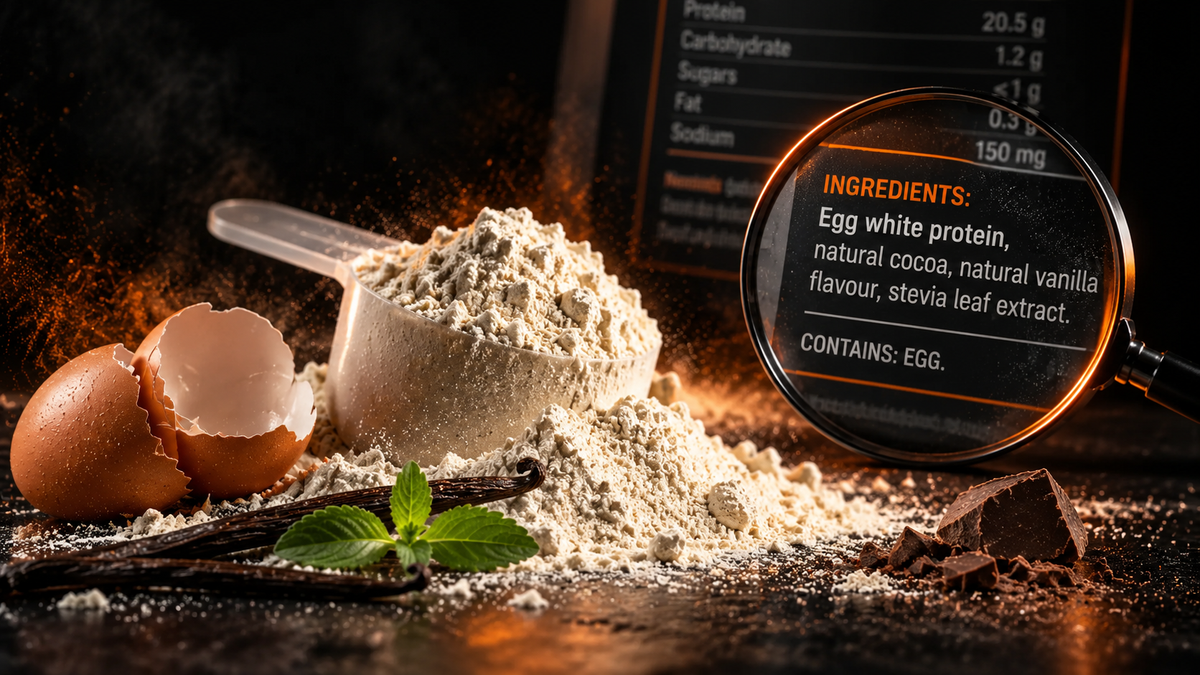

A food scientist's guide to reading the label.
Have you ever stood in the supplement aisle and immediately felt intimidated by the wall of brightly coloured packs, intense-looking graphics, and pack sizes ranging from slim single-use sachets through to heavy-duty industrial-sized tubs that look like they'd feed a small army? You thought you were just buying fuel for muscle recovery, but suddenly you're staring at words and acronyms like “Oxy”, “Shred”, “Bulk”, “Gains”, “BCAAs”, and “WPI” paired with images of lightning, dragons, and Mr. Universe characters that look like they've stepped out of the 80s — and we haven't even got to the ingredients list yet!
If protein powder labels leave you scratching your head, you aren't alone.
It can be a challenge to make a great-tasting, dry, mixable, shelf-stable protein powder, and there's a variety of ways to achieve this. On the supermarket shelf there's a wide range of products, from old-school legacy recipes developed decades ago with artificial sweeteners and flavours, through to modern, clean-label varieties naturally sweetened with no nasties. It definitely pays to look at what you're buying.
In this article we decode exactly what the main ingredient in protein powder is, explore what ingredients should be in your protein powder, and highlight the hidden red flags you need to avoid. Let's turn you into a label-reading expert so you can confidently fuel your body with exactly what it needs and nothing it doesn't.
The Core: What Is the Main Ingredient in Protein Powder?
The answer should be very simple: a high-quality protein source like whey protein isolate, casein, egg white, or a plant-based protein blend (e.g. rice, pea, hemp). In a perfect world, this primary protein source would make up most of the tub's volume, delivering the essential amino acids your muscles need to recover and keeping you feeling fuller for longer.
However, the reality of food manufacturing is a bit more complicated. If you've ever wondered what the ingredients in protein powder are beyond that primary protein source, you might be surprised to learn that a standard powder formula has plenty of extras.
Think about it from a manufacturing perspective: to take a liquid protein (like whey or egg white), dehydrate it into a dry powder, ensure it survives sitting on a warehouse shelf, and make it taste like a chocolate milkshake when mixed with tap water requires some serious food science.
Because of this, we usually find a blend of functional additives. A typical tub is a carefully calculated mix of ingredients to help the powder dissolve (emulsifiers), sweeteners, anti-caking agents to stop the powder clumping, and thickeners (like plant-based gums) to keep the powder suspended once mixed with water and to provide a creamy mouthfeel.
The Good: What Ingredients Should Be in Protein Powder?
When people ask me what ingredients to look for, my golden rule as a food scientist is simple: look for functional, natural ingredients.
A truly high-quality label should read like a premium grocery list, not a synthetic chemistry textbook. Ideally, you want to see:
- A pure protein source: Protein should be listed first in the ingredients list. In Australia, ingredients are listed in order from highest to lowest quantity by weight, so this means it's the main ingredient. Aim for a high-quality source such as pasteurised egg white powder, whey isolate, or a plant protein that results in a finished powder with a high protein content (typically 70% or more protein by weight).
- Natural flavouring: Look for real, recognisable flavour sources like alkalised cocoa powder or vanilla bean extract.
- Natural sweeteners: If the product is sweetened, opt for natural, plant-derived options like steviol glycosides (stevia), thaumatin, or monk fruit.
- Optional — natural plant gums & stabilisers: Some protein powders use natural plant fibres like acacia and guar gum to give your shake a smooth, creamy texture with the added benefit of boosting your daily soluble fibre intake. They may also include natural stabilisers, like xanthan gum, to ensure the powder mixes perfectly with water.
Protein Powder Ingredient Checklist
Use this quick reference guide next time you're comparing labels:
| Ingredient Category | Purpose in Powder | Premium Clean Powder | Budget / Cheap Powder |
|---|---|---|---|
| High-Quality Protein | Primary muscle fuel | ✅ | Varies (often cut with cheap concentrates) |
| Natural Sweeteners (Stevia, Monk Fruit, Thaumatin) | Sweetness without calories | ✅ | ❌ |
| Artificial Sweeteners (e.g. Sucralose 955) | Synthetic, hyper-sweetening | ❌ | ✅ |
| Natural Gums (Acacia, Guar, Xanthan) | Texture and suspension | ✅ | Varies |
| Lactose (Dairy Sugar) | Unfiltered dairy byproduct | ❌ | ✅ (a major bloat trigger) |
| Cheap Fillers (Maltodextrin, Milk Solids) | Filler/bulking | ❌ | ✅ |
| Artificial Colours | Synthetic visual appeal | ❌ | ✅ |
The Red Flags: What Ingredients to Avoid in Protein Powder?
Now for the dark side of supplement manufacturing. Look for words that are designed to stretch the product, artificially sweeten it, or artificially colour it.
Here is a quick checklist of what to avoid:
- Cheap fillers: Ingredients like maltodextrin (a highly processed carbohydrate) or milk solids are often used to bulk up the powder cheaply, diluting the actual protein content.
- Artificial sweeteners: Sucralose (955), aspartame (951), and acesulfame potassium (950) are synthetic sweeteners that are hundreds of times sweeter than sugar. While they keep calories low, they are highly processed.
- Artificial colours and flavours: If your strawberry protein powder gets its colour from artificial colours listed as numbers in brackets (e.g. “colour (129)”) when it could be using strawberry powder, leave it on the shelf.

The Bloat Factor
A massive complaint from fitness enthusiasts is digestive discomfort. So what ingredients in protein powder cause bloating?
- Lactose: Found heavily in cheaper whey concentrates, lactose is a leading cause of gas and bloating for anyone with a dairy sensitivity. We break this down further in Egg White Protein vs Whey Protein.
- Sugar alcohols: Ingredients like erythritol or xylitol are common culprits for gastrointestinal distress.
The Apex Solution: A Cleaner Powder
If your goal is to consume a highly bioavailable protein without ingesting a science experiment of cheap fillers, lactose, and artificial sweeteners, you need a smarter formula.
Enter: Apex Muscle Egg White Protein Powder.
By utilising a premium, naturally dairy-free alternative, Apex Muscle delivers a complete amino acid profile that is naturally high in leucine. Here's why this powder is a smart choice for label readers:
- Premium base: It starts with pasteurised egg white powder from cage-free eggs, providing a hefty 20.5g of protein per serve.
- Bloat-free: You get all the muscle-building benefits of a premium complete protein, but without the lactose and dairy allergens that cause stomach discomfort in standard whey concentrates.
- Naturally sweetened & flavoured: It features real alkalised cocoa powder, natural chocolate flavours, and is naturally sweetened with steviol glycosides (stevia) with absolutely no added sugar.
- Functional & versatile: To ensure a clean, smooth shake whether mixed with water or blended into a smoothie, it uses natural stabilisers (guar gum, xanthan gum) and soluble fibre (acacia gum).
At the end of the day, true label literacy isn't just about knowing which red flags to avoid — it's about finding products that don't force you to compromise in the first place. New to the idea of a complete protein? Start with What Is a Complete Protein?
Label Literacy FAQs for Australian Consumers
What are those three-digit numbers (like 955 or 415) on my protein powder label?
In Australia, food additives must be declared by their class name followed by their International Numbering System (INS) number. Instead of writing out complicated chemical names, companies use these codes. For example, “Sweetener (955)” is sucralose (an artificial sweetener). As a food scientist, my advice is simple: the fewer artificial numbers on the label, the better. Look for products that use natural ingredients or safe, standard functional components.
Why does my protein powder cause bloating, and how do Australian allergy labels help?
Bloating from protein powder is incredibly common, and it's usually caused by lactose (dairy sugar) or sugar alcohols (like erythritol) fermenting in your gut. Recently, Australia updated its Plain English Allergen Labelling (PEAL) laws, making it mandatory for manufacturers to declare allergens like milk or soy in bold font within the ingredients list. If your whey concentrate is causing you grief, check the bolded text. Better yet, switch to a naturally dairy-free option like egg white powder to eliminate the bloat factor.
Ready to read fewer numbers and more real ingredients? Shop Apex Muscle's range of Egg White Protein Powders.


